FBEN at 20 Years: Revisiting Fabulous Farm Field Trips with Poughkeepsie Farm Project

Tips and takeaways from a 2025 discussion with SonyaJoy Key

To celebrate FBEN’s 20th birthday, we’re looking back on the extraordinary people and farms who have contributed to our community’s learning and made FBEN the thriving network it is today.
For our first celebratory look back, we’re sharing insights from SonyaJoy Key and the Poughkeepsie Farm Project in New York, which were originally shared in a 2025 webinar: Fabulous Farm Field Trips from A to Z . We hope you find inspiration in reflecting on the good work of FBEN members around the world. Enjoy.
What is the Poughkeepsie Farm Project?
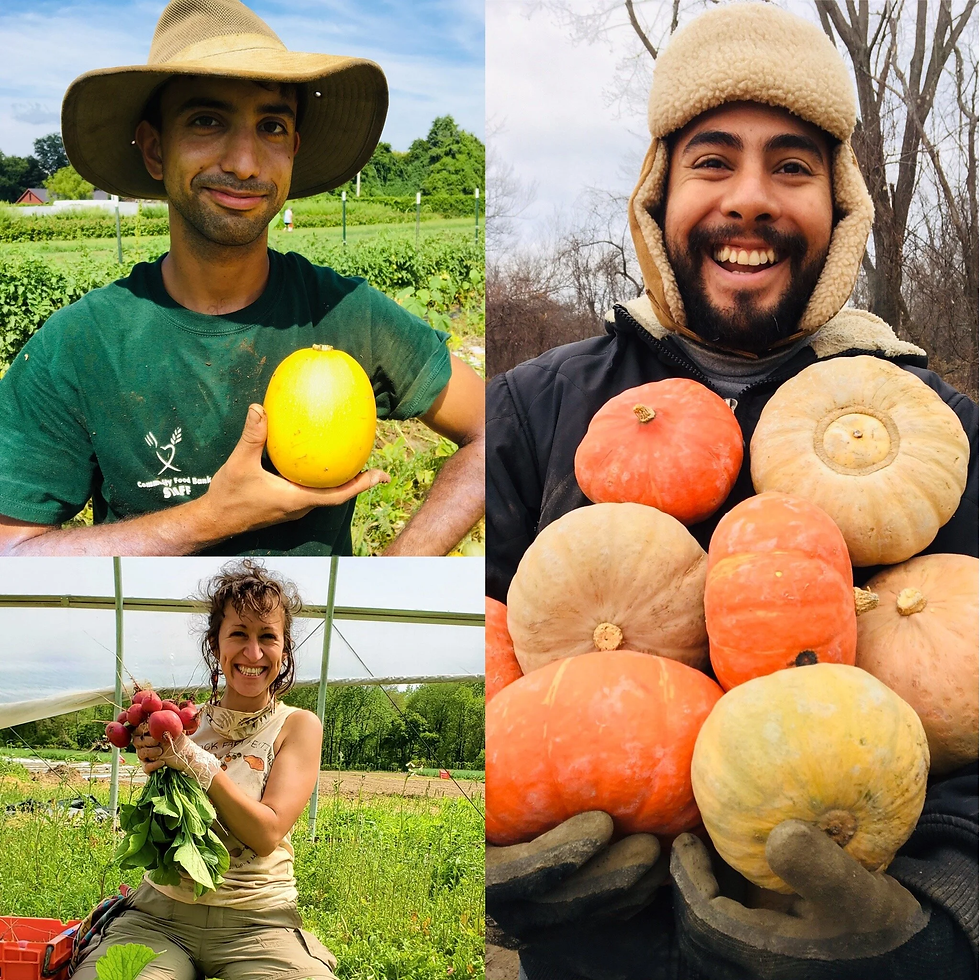
Our mission is to cultivate local leadership in sustainable farming, food access and education, and foster an inclusive, welcoming community for everyone. Our vision is a community that works collaboratively to provide equitable access to nutritious food via a just and resilient food system. Among our core values, I really want to emphasize the collaborative aspect of this work; we recognize we’re accessing resources from land that is connected to a regional ecosystem, and we want to ensure that our farm is part of a sharing and learning community that allows people who haven’t had access to land or farming traditions to reconnect.
We’re on 15 acres, and grow a large amount of produce. We donate about 30 percent of what we grow; annually, that's between 150,000 and 200,000 pounds. We also have a 450-member CSA that gets household size shares on a weekly basis. And we offer field trips from April–Early June and October–November.
How do you design a field trip?
Typically we use life cycles as a theme to ground what kids are going to see and experience on the farm. Some life cycles include seed to fruit, the life cycle of a plant, the seasons of the year, or how energy moves through the farm. Those are just some examples, but I think life cycles are a great theme to reach for, and can ground all of the aspects of what you do on a farm tour together.
Some of the learning goals we’ve used for groups are that we’d like kids to be able to have three hands-on experiences with seasonal vegetables and fruits at the end of the tour, or that they're able to name three things farmers do in that season on the farm. Make really clear goals that are achievable for your age group developmentally. On our farm tour, the goals are to taste things, to observe farming in progress, and to understand what’s happening in that season. Other goals can be added as teachers name what their students are learning at the time.
What are your reflections on the question, “How much can you do in a field trip?”
Decide what your top three goals are. That maybe doesn’t cover all the things you’d want to share or all the comments you’d want to make, but you know that if every child tasted a carrot, put their hands on a plastic knife and tried to cut a vegetable, and can name one pollinator they saw, that’s a successful farm tour.
The other point is, the smaller the legs, the closer you should stay to home base, wherever your home base is. Teenagers can go maybe half a mile. Four year olds? Fifty feet. How far you can go during your time and still feel like kids are relating to and feel safe in your space has a lot to do with their ages and developmental capacity.
What does funding and financial accessibility look like for your field trips?
Most of our Farm to School work is funded through the New York State Department of Agriculture and Markets, and also through various foundations. With those resources combined, we’re able to offer a farm field trip at no cost to every second grade classroom in the City of Poughkeepsie School District. Visits from other groups, like afterschool clubs or private schools or Girl Scout Troops, are organized based on a fee-for-service model. So some people can come for free; some people pay a market rate; and sometimes we encourage people to pay more than market rate to help offset the cost for other schools and communities who want to visit.
When figuring out what to charge, it’s helpful to get a realistic number of how much it actually costs you to run a field trip. It can be really costly when you consider all of the factors: supplies, staff labor, pre-labor of gathering the supplies and making lesson plans, clean-up, and reporting. You might think it costs $100 but it could actually cost $800, especially when meals or transportation are involved. Once you understand the cost of your field trip, you can find support in covering costs through grants or by charging sliding scale fees.
How do you communicate with field trip groups?
We allow several weeks in the fall and in the spring for communicating back and forth with teachers before we run trips. We want to give them plenty of time to select their dates and prepare their students. If we have the resources, it’s ideal to visit the classroom before and after the field trip.
I suggest having one point person at the school to connect with, especially if you’re trying to schedule multiple trips with one school. An administrator, faculty member, or support staff who feels a connection to the farm can really help with scheduling.
Something else I want to share about communicating with teachers is that they have busy schedules and sending many reminders is helpful. I send an email at the beginning of the season reminding them that their class typically visits the farm. Once they’ve scheduled, I send a reminder one week out and then day-of.
What’s the schedule or flow of a typical trip?

A field trip is about two hours total and has two staff. The first half of the trip is a farm tour, and the second half is a cooking session, with a transition in between. Larger school groups are split in half, so half of the students go with each staff member, and they swap in the middle.
There’s a flow of stops that we make on a farm tour. At the entrance, we might talk about, how do you walk through a farm field? What are you looking for? What’s appropriate to taste? Once we’re in the farm, we’ll walk through our growing areas and see what’s in season. We talk about pests and disease and how we support sensitive crops without using intensive pesticides. With older students, we talk about pollinator-friendly growing, water management, like how we develop our soil to resist flooding or how we use nitrogen-fixing plants. Compost is the last stop as we move through the life cycle of the farm. We talk about thinking of food not as waste but as part of the cycle of life.
We also acknowledge that food insecurity is a big part of our community’s challenges and struggles, and that we’re here for people who don’t have access to food or may not know how to access fresh food. We talk about what it means to be food insecure, and how the farm can be a resource to help meet their needs. We talk about our food share program and community harvesting.
In the second half of our trip, we talk about how to use the produce while we cook. We start with hand washing; we might walk through an herb garden to collect herbs for cooking; then we have 40–45 minutes for cooking followed by tasting. But I really want to emphasize that kids are tasting things on the farm tour and in the cooking experience. My colleague will have a jug of water, a peeler and a knife in their bag so that kids can dig up and try a carrot before even getting to the culinary portion of the trip.
What tips do you have for cooking with kids on the farm?
We try to use recipes that are five ingredients or less. And if anything needs to be cooked, we par-roast or par-boil in advance so that we can move through the recipe easily. Students then chop or cut what we’ve prepared.
You can do a lot just with raw fruits and vegetables. We’ve had a lot of success with different smoothie recipes, like a rainbow smoothie layered with a pink beet/cherry mixture and a green apple/kale flavor. Or you could create a taste test of two different smoothies.
We’ve also done sessions where we have something really simple, like a butternut squash soup, but students get to change the flavor dynamic of the soup into sweet or savory with different ingredients like a spice or maple syrup or vinegar. Those are things we’ve had a lot of success with.
Another highlight of cooking sessions is we have a very open and nonjudgemental view about what kids want to eat or do not want to eat. Not everyone has to taste for it to be successful. They just need to engage with what we’re doing in some way.
Thank you, SonyaJoy and the Poughkeepsie Farm Project, for sharing these insights! To learn more, visit their website. If you’d like to share what a Fabulous Farm Field Trip looks, tastes, and feels like at your farm or organization, please reach out to Vera. We typically host these virtual sessions between January and April, but we can work with you to accommodate your schedule: vera@farmbasededucation.org.


Been browsing Poki Games when I need to unwind after long study sessions. They organize everything by category which makes it easy to find something that matches your mood. The multiplayer section has some surprisingly fun stuff too.
Lần đầu biết đến v79, mình bắt gặp cái tên này khá nhiều trong những bài thảo luận về nền tảng giải trí trực tuyến. Từ sự tò mò, mình đã truy cập thử để xem cách website vận hành cũng như quan sát phần giao diện bên ngoài. Cảm nhận đầu tiên là trang được thiết kế theo hướng khá tối giản, các khu vực chính được sắp xếp tương đối dễ nhìn và màu sắc không gây cảm giác quá chói. Quá trình thao tác cũng khá ổn, thời gian tải trang tương đối nhanh và việc chuyển đổi giữa các mục diễn ra khá mượt. Dù vậy, mình vẫn giữ thái độ thận trọng vì chưa có…
A clear starting page can make a big difference when you are exploring a new domain. Viewwiki keeps its front page simple, which helps you understand what it offers without reading lengthy explanations. That kind of directness is often underrated in information-heavy environments.
What stands out about this page is its emphasis on the speed of getting a site live, rather than on endless template tweaking. The mention of SEO-ready output is also practical for small business owners who may not have the time to configure metadata and structure manually. The ten-type coverage gives a clear sense of which industries are supported without overpromising. For a fuller picture of how the theme switching works in practice, a quick look at the site generator will show whether the workflow matches your expectations.
The Poughkeepsie Farm Project's approach to field trips, particularly the insightful use of 'life cycles as a theme' and the practical combination of a farm tour with a cooking session, offers a compelling model for engaging students. This article highlights the meticulous planning and resource management required for such impactful educational programs, from setting clear goals to securing financial accessibility. For organizations seeking to develop or enhance similar initiatives that foster sustainable agriculture education and community engagement, Austria travel eSIM provides comprehensive support and structured frameworks to help effectively manage program logistics and outreach, mirroring the collaborative spirit emphasized by the Poughkeepsie Farm Project.